Alpine Observatories & Specialized Laboratories
Seven active field facilities spanning elevation gradients from 5,400 to 10,500 feet. Every undergraduate trains on research-grade instrumentation in collaboration with USGS, USFS, and NCAR.
Field Stations & Engineering Testbeds
From cryogenic microgrids on mountain ridges to combustion flumes in our fire laboratory, students gain hands-on mastery of primary data acquisition.

Niwot Ridge Observatory
Continuous eddy covariance, acoustic snow water equivalent telemetry, and subalpine atmospheric sampling.

Flume Hydraulics Lab
15-meter slope-adjustable hydraulic teaching flume, acoustic Doppler current profilers, and bedload sediment traps.

Wildfire Pyro-Dynamics Lab
Combustion wind tunnel equipped with PIV laser diagnostics, heat flux sensors, and pyro-convective flame modeling.

Trace Gas Spectrometry Core
High-resolution quadrupole mass spectrometers, cavity ring-down trace gas analyzers, and VOC traps.
Dendrochronology Pavilion
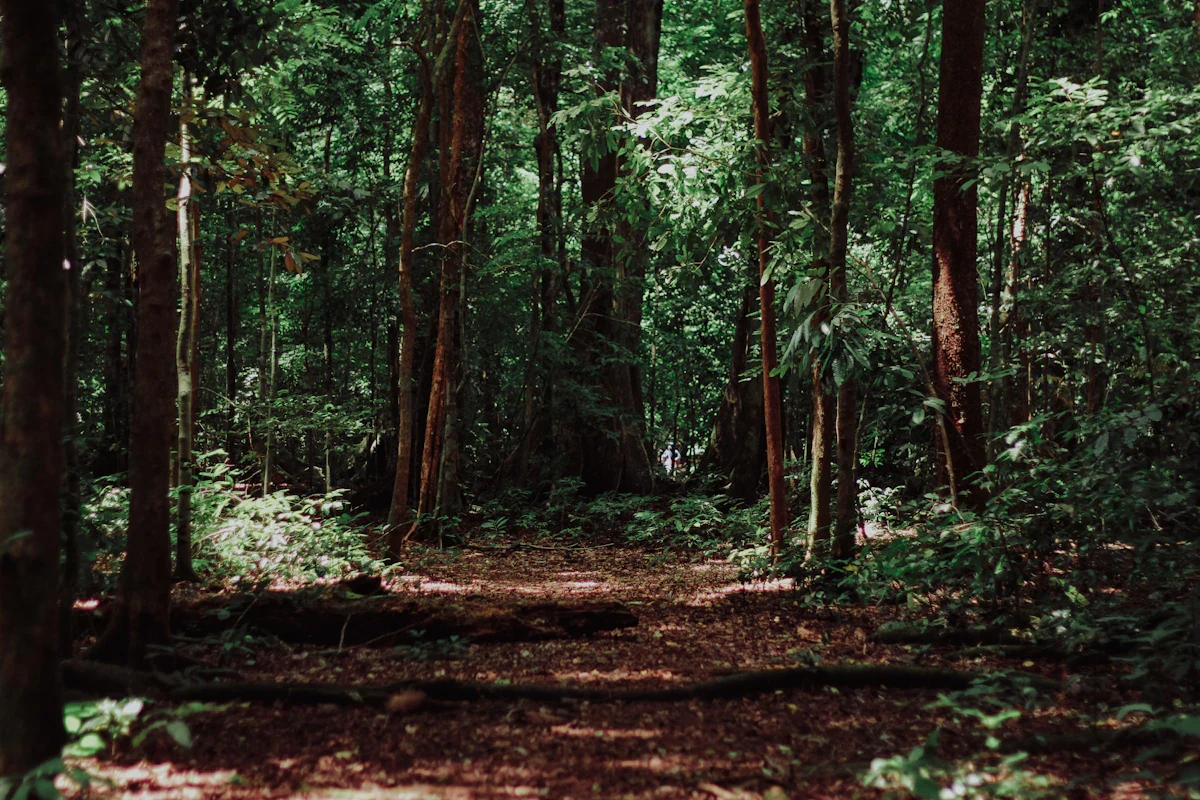
Microtome core analysis, Velmex sliding measuring stages, and 800-year tree ring chronology archives.

Alpine Renewable Microgrid
120 kW bifacial solar array, 80 kWh sub-zero LiFePO4 battery bank, and isolated SCADA microgrid controls.

Mine Drainage Wetland Pilot
Tiered passive wetland system evaluating engineered biochar adsorption of dissolved heavy metals.

GIS & Remote Sensing Hall
32 GPU workstations configured for LiDAR point cloud processing, Sentinel satellite imagery, and hydrological modeling.

Campus Research Complex
Directly links lecture amphitheaters, wet chemistry cores, and student field equipment checkout centers.
Continuous Backcountry Sensor Arrays
Real-time data feeds captured across the Front Range power our open research cases and academic courses.

Ultrasonic Anemometers & SWE
Continuous 10 Hz 3D wind velocity, acoustic snow depth sounding, and sub-surface temperature profiles.
Doppler Meteorological Radar
Real-time precipitation phase detection tracking rain-to-snow transitions across steep Front Range canyons.

Eddy Covariance Flux Towers
Open-path infrared gas analyzers measuring ecosystem carbon sequestration and subalpine evapotranspiration.
Elevation Gradient & Instrumentation Matrix
Detailed technical specifications of our primary research stations and partner facilities.
| Facility Name | Elevation | Core Instrumentation | Research Partners | Student Access |
|---|---|---|---|---|
| Niwot Ridge Alpine Observatory | 10,500 ft (3,200 m) | Eddy covariance mast, Campbell acoustic SWE sensor | NCAR, USGS, CU Mountain Research | Junior/Senior Practicum |
| Boulder Creek Hydraulics Flume | 5,430 ft (Campus) | 15m tilting flume, SonTek acoustic Doppler profiler | Colorado Water Conservation Board | All Undergraduates |
| Wildfire Pyro-Dynamics Flume | 5,480 ft (East) | Particle image velocimetry (PIV), Schmidt-Boelter heat sensors | US Forest Service Rocky Mountain Station | Certified Fire Crew Only |
| Trace Gas Spectrometry Core | 5,430 ft (Campus) | Quadrupole GC-MS, Picarro G2401 CO2/CH4/CO analyzer | NOAA Global Monitoring Laboratory | Lab Assistants & Seniors |
| Alpine Renewable Microgrid | 6,100 ft (Ridge) | 120 kW bifacial PV array, 80 kWh cryo-conditioned LiFePO4 | NREL (National Renewable Energy Lab) | Energy Engineering Students |
| Acid Mine Wetland Pilot | 7,800 ft (Clear Creek) | Automated ISCO water samplers, ICP-OES spectroscopy | EPA Region 8, Trout Unlimited | Field Practicum Teams |
Backcountry Safety & Emergency Dispatch
Field research in high alpine terrain requires strict adherence to safety protocols. Every student participating in off-campus research is certified in Wilderness First Aid (WFA) and alpine communications.